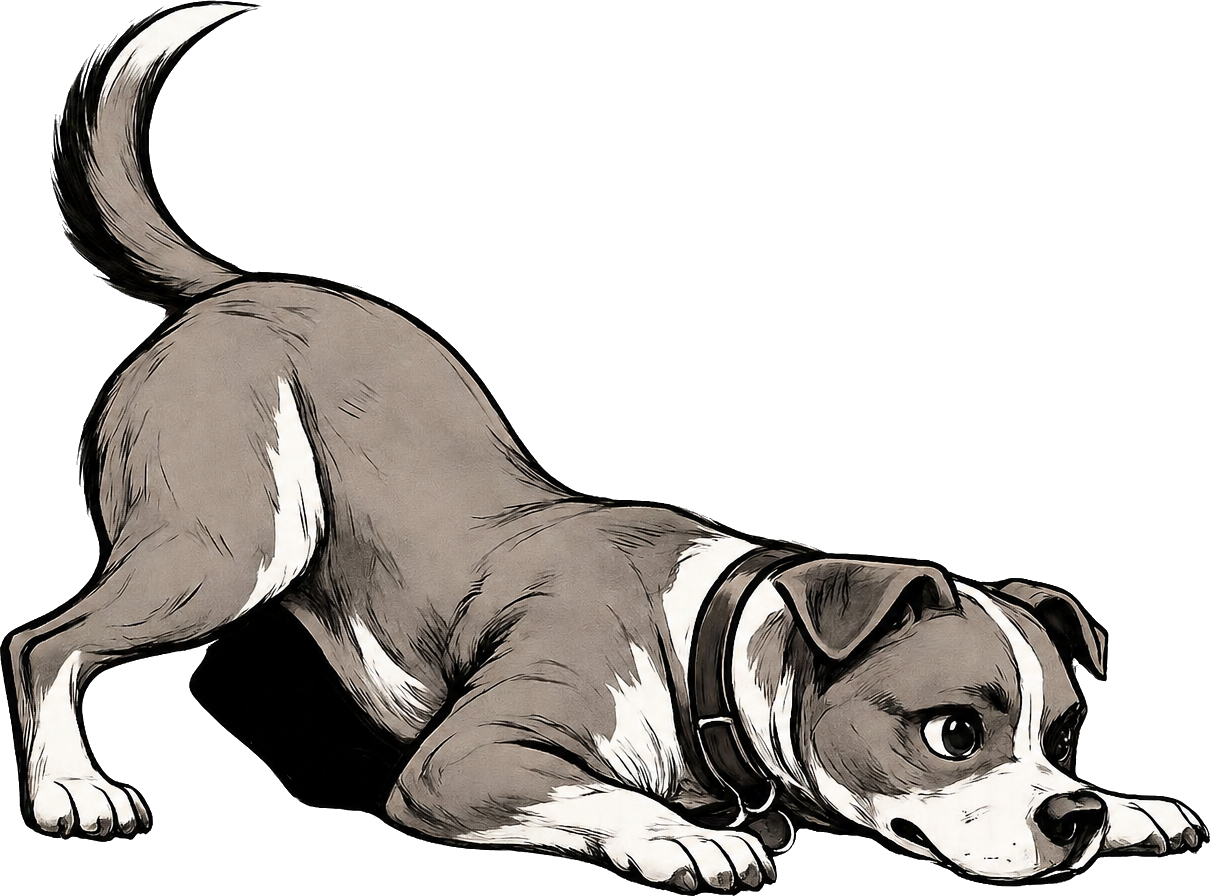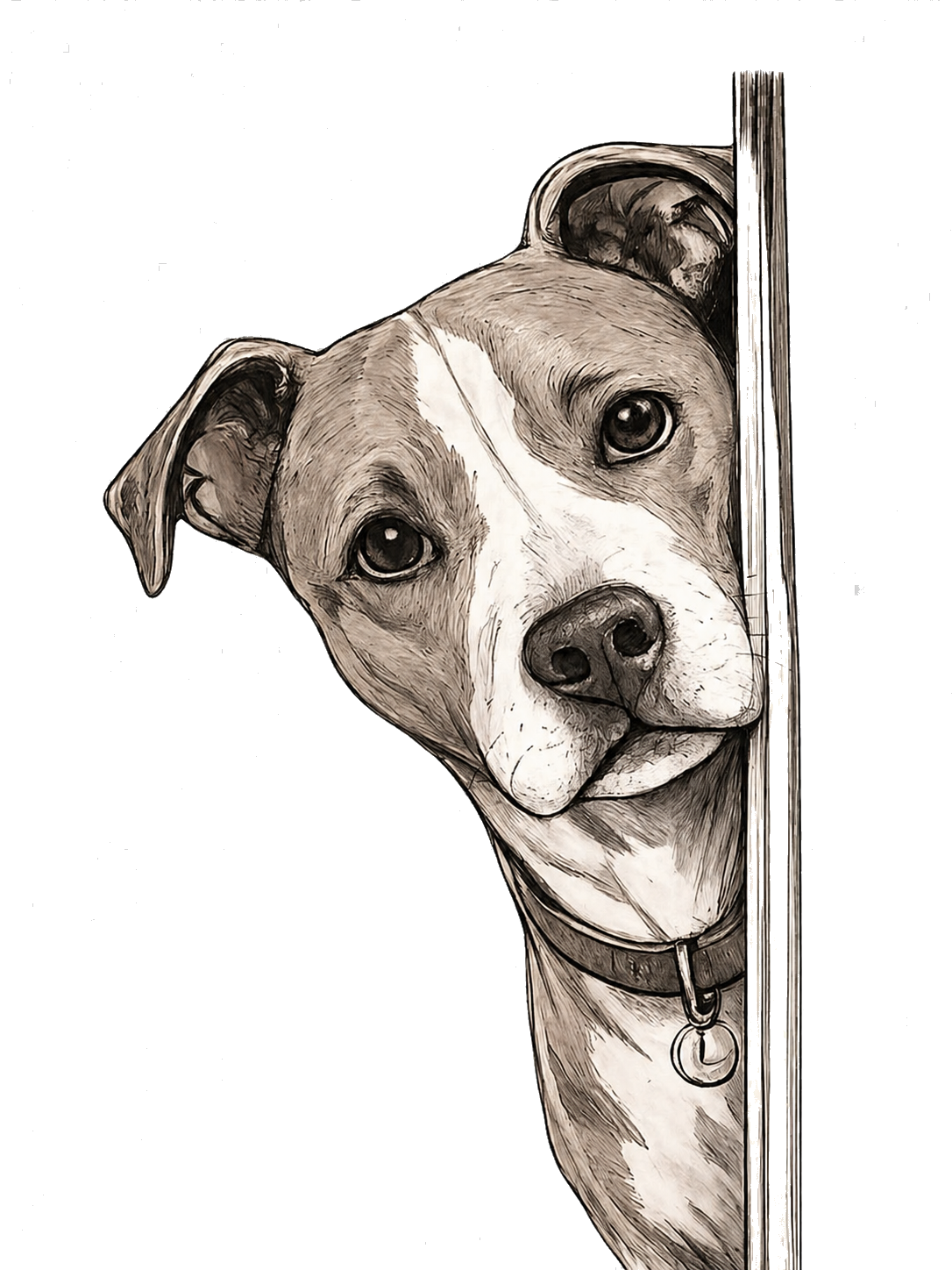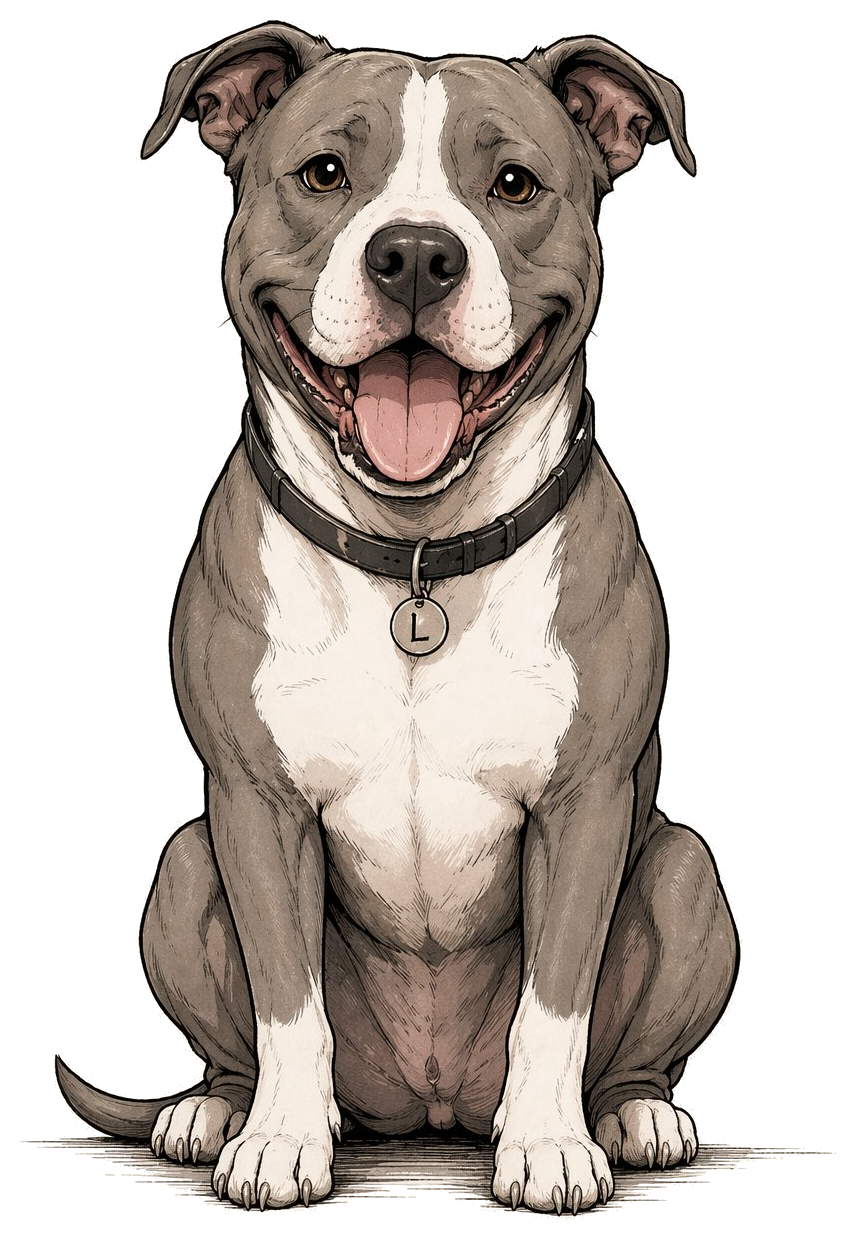
She was acting funny.
That's how it always starts. Not a thing you can name yet. Just — off. I think she's eight. She jumped into my lap six years ago and we've been teaching each other how to act ever since, and you know when something is wrong with an animal you've lived with that long. You don't have a word for it. The word comes later, from a stranger. What you have, in the beginning, is a feeling under the ribs that something has shifted in the house and you don't know what.
I had a guess. Two, actually — I'd narrowed it down between two things in my head on the way in, the way you do when you've spent enough years with an animal that you've absorbed some of the vocabulary by accident. I wasn't sure. But I had it down to two, and one of them was the kind of thing you don't sit on.
It was after hours. So it wasn't our regular vet. It was the kind of place you drive past a hundred times without thinking about — the brightly lit lobby, the sliding doors, the name on the building you've never had a reason to read carefully. Until the night you have a reason.
I sat there for five hours.
Five hours, watching the lobby fill and empty and fill again, under the impression that on the other side of the door something was being figured out. That the wait was the work. That whatever was wrong with her was, in some quiet methodical way, being chased down by the kind of people who chase those things down for a living. I held that belief for five hours because the alternative was unbearable, and unbearable beliefs are the easiest ones to hold onto in a waiting room.
Then a man came out and told me, slowly and in order, the same observations I had given the front desk when we walked in. Read them back to me like he was reading from notes I had written. She's been quieter than usual. Hasn't wanted to eat. There's something in how she's standing. All of it. Mine, returned to me. And then he said, so we'd want to run some diagnostics. Is that something you'd like us to do?
I looked at him for a long second before I answered, because I was trying to decide whether the question was real. I asked him what he thought I had brought her there for.
He told me the diagnostics would be eight hundred dollars. I said okay. He said payment up front.
I had been to that building before. I had paid them more than two thousand dollars over the months prior, on the spot, every time, without asking a single question. I told him this. I told him I had a check from the day before that would clear the moment the bank opened in the morning. I showed it to him — actually held it out, like a permission slip. We can't do anything without payment. That was the sentence. That was the wall.
I sat back down with her in the lobby. And while I was sitting there — this is the part I keep coming back to — another customer walked in, gave a name at the front desk, was handed their dog still groggy from a procedure, and paid the bill on the way out. On the way out, while I was sitting there with mine getting worse. The same building. The same desk. The same policy, applied unevenly, because policies are always applied unevenly, and you only notice when you're the one on the wrong side of the unevenness.
I left.
I sat in the parking lot of that hospital and I called every clinic I could find a number for. A woman answered at one of them. She wasn't a vet. She was the person who answers the phone — the kind of person whose job description doesn't capture what she actually does, because what she actually does is hold the front of a place together with her voice. I told her what was happening. She said they could see us. I said I was on my way.
I was already driving when she called me back.
She had been thinking about it, I guess, after we hung up. She asked me a couple more questions — pointed ones, the kind you only know to ask if you've heard something like this before — and then, gently, over the phone, from a desk in a building she had never seen us in, she told me what she thought was wrong with my dog.
She was right. I didn't know that yet. But she was right.
She told me, kindly, that her clinic could see us — but if it turned out to be what she suspected, they didn't have a surgeon on staff, and they would have to send us back to the place I had just walked out of. I said fine. I kept driving.
On the way I made more calls, because I was not going back to that lobby unless I had to. And I found a clinic, in the same area, that had a surgeon and had time. I changed direction. I went there instead.
They took her back. They brought her out. They confirmed what the woman on the phone had told me an hour earlier from a desk in another building she had never seen us in. The thing I had been afraid of was the thing it was. Surgery tonight. Without it, she would not survive the next twenty-four hours.
They gave me a range. The kind of range you get when nobody knows yet exactly what they're going to find once they're in there — a low end and a high end, and a stretch of unknown in between.
I told the woman at the desk that I had a thousand dollars. Not a thousand to put down. A thousand, total, that I could put my hands on tonight. That was the sentence I had to say out loud to a stranger in a lobby about my dog, and there is no graceful way to say it, so I just said it.
I told her I had already tried, that afternoon, at the other place — the financing companies, the ones whose names you see on signs in vet lobbies. I'd been turned down. Not enough credit history. It is a strange thing to be told you are too unknown to be allowed to save your dog.
She went to the back to ask.
I stood in the lobby and waited and tried not to look at my dog, because looking at her was making it worse.
She came back and told me what the owner had said. Put the thousand down. We'll figure the rest out when you come back to get her staples out.
That was the whole thing. That sentence. From a man I had not yet met, in a building I had never been inside before, about a dog he had no history with and a person he had no reason to believe. A handshake on a Friday night, on a thousand down, with the rest of it left as a sentence — we'll figure it out — that does not exist on any policy document in any clinic in the country, because it cannot. The moment you try to write we'll figure it out down on paper, it stops being trust and starts being terms.
She is asleep on the floor next to me right now, because of that sentence.
I picked her up the next morning. The man who handed her back to me was the same one who had said yes the night before — surgeon, owner, the whole practice essentially walking out of the back room with my dog in his arms. We stood in the lobby for a while and talked, the way you do when something has just ended well and neither person is in a hurry to leave the room where it ended well.
He asked what I did for work. I gave him my construction card. And somewhere in the conversation, plainly, without performance, he told me about his own version of the night before. A different animal. A different ending. The same kind of place I had walked out of. He had been across an ocean when it happened. He had gotten on the first flight. He hadn't made it in time. He told me this the way people tell you the things that don't go away — not asking for anything from the telling, just laying it down between us because we were standing there and it was true.
He said something else, too. Not as a complaint. As an observation, the way a man who has been in a profession a long time will sometimes describe the shape of it out loud, almost to himself. That practices like his could not keep saying yes to people like me forever. That every yes was, in some real sense, a hope — a hope that the person walking out the door with the dog would come back with the rest of the money, on time, the way they said they would. That the hope was not always rewarded. That the math of it was getting harder to carry, year over year, even for someone who could not imagine doing anything else with his life.
He did not say it to make me feel guilty. He was not building toward anything. He was just telling me the truth about the shape of his work, because we were two men in a lobby on a Saturday morning and one of us had just handed the other one his dog back.
But I stood there and I understood something I had not understood the day before.
It was not the hospital that had failed me. Not really. The hospital had a policy, and the policy was the policy, and policies are what places run on when trust has not been built yet. What had failed was the absence of any other mechanism — any way for a person like me to walk into a place like his, in the calm months when nothing was wrong, and start being known. Not medically known. They already do that part, and they do it well. The other kind. The kind that means something at a counter, on a Friday night, when the number on the paper is bigger than the number in the account.
There should have been a way to begin that. Months earlier. Years earlier. A wellness visit, the kind every vet wishes more people came in for, paid not in one impossible afternoon but in twelve small months — small enough that the answer was always yes, in-house with the clinic itself, building a quiet record of this person shows up, this person pays what they said they'd pay, so that by the time something went wrong, the conversation at the counter could start somewhere other than zero.
Not insurance. Not a loan. Not a credit card with a name on it nobody trusts. Just the year before the hard day. The way to be the person they already know by the time they need to know you.
I am a contractor. I build houses for a living. I had no business standing in a vet's lobby thinking about any of this. But I could not stop thinking about it. The siding job I was on at the time finished out in the late fall, and the winter work hadn't lined up yet, and one afternoon I sat down at the kitchen table and started building a slide deck instead. That slide deck became something else. That something else became this.